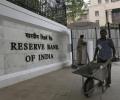
In all, RBI has cut interest rates by 110 bps this year. But this has not yet led to a boost in economic activity. While the growth rate has slowed to a five-year low, consumer confidence is waning and foreign direct investment has plateaued.

As many as nine respondents said RBI would hold the repo rate at 8% till March-end, 2015

The year 2014-15 could well go as one of long-pending financial sector reforms, expected to have a lasting impact.

There's only a slim chance of a substantial drop.
The use of Section 7 is fraught with risks to the autonomy of the central bank, the credibility of the government and the smooth functioning of the financial markets, says A K Bhattacharya.

The rating agency expects the Reserve Bank of India to continue its accommodative monetary stance.

A monsoon deficit is likely to affect the agriculture output, which could have an impact on the food inflation
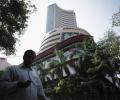
Broader markets underperformed indices with BSE Midcap down 0.43% while the Smallcap index fell 0.07%.

On speculative front as well, non-commercials have decreased bullish bets on COMEX silver futures and options to a three-month low.

Instead of a rate hike, or even a pause, there could be a window for the RBI for an interest rate cut

India's numbers have shown a reasonable amount of improvement.

Being one of the early commentators to flag economic slowdown and caution investors on corporate earnings, Gautam Chhaochharia, head of India research, UBS Securities, in an interview with Hamsini Karthik says the markets remain in an expensive zone despite the recent correction.
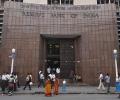
RBI had previously cut repo rate by 0.25% each in January and March.

Experts caution against tough times in Indian equity markets in 2015.

Dealers say foreign investors are now taking keen interest in lower-rated corporate bonds, too

PMI went up from 51.2 points in May to 53.1 in June. Owing to the June figure, PMI for manufacturing stood at 51.9 points in the first quarter of 2018-19 against 51.8 points in the fourth quarter of 2017-18.
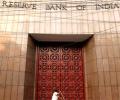
Rajan said it was important that the government and the RBI be vigilant to the growth scenario.

Heading to the third year, will Urjit Patel be busy firefighting a currency crisis? Almost no governor of the RBI managed to evade it and Patel perhaps knows it.

'The variables to watch include the monsoon, resolution of NBFC liquidity issues, GST collections, and NPA resolution.'

Given the relative rates of gross domestic product growth, the differential will increase.

The HSBC India Manufacturing Purchasing Managers' Index, a measure of factory production, stood at 51.3 in April, unchanged from 51.3 in March, amid moderate expansion of incoming new business orders.

As FY20 Budget fiscal measures need to be better understood, a reversal of the stance back to neutral will allow MPC flexibility to respond to incoming data.

If Mr Modi and his team expect to win the 2019 elections, groundwork for improved performance in their second term should be done now.

'The Indian economy is in slowdown and growth may stay slow,' notes Devangshu Datta.

A career Citibanker, 'Selva' came into the spotlight as the person who rewired the financial behemoth's Indian retail operations.

As it stands, there does not seem to be a threat to prices.
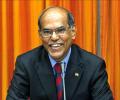
In a forthright "last public lecture" before he retires next week, RBI Governor D Subbarao was on Thursday sharply critical of the government, blaming its "loose fiscal stance" for the current economic woes, and warned that the root cause of rupee depreciation is "domestic structural factors."

RBI governor Raghuram Rajan has slashed rated by 50 bps.

Markets taking cue on future rate cuts from RBI policy.

Financials are the top gainers along with index heavyweights.

The global economy is fragile now. It continues to face both long-term and short-term issues.

Banks led the decline with Nifty Bank and BSE Bank index dropping over 3% each.

New Delhi was reluctant to spook investors by clipping the bank's wings

The RBI must first deal with the adverse turn of events in the CPI.

As a result, the forecast of eight per cent retail inflation by January next year looks achievable.
The Reserve Bank on Thursday said the macroeconomic risks to the Indian economy have increased over the last six months due to the fall in growth, external sector developments and subdued performance of the corporate sector.

'The markets have corrected almost 8-9 per cent from their highs, so one can accumulate quality stocks at reasonable prices.'

The Reserve Bank left interest rate unchanged.

Change will have to begin with Mr Modi, who by all accounts has shown little active interest in macro-economic issues, preferring instead to focus on the effective implementation of projects and programmes, points out T N Ninan.

'Indian macro conditions have never been better, and many businesses will safely compound earnings over the next five years.'
